
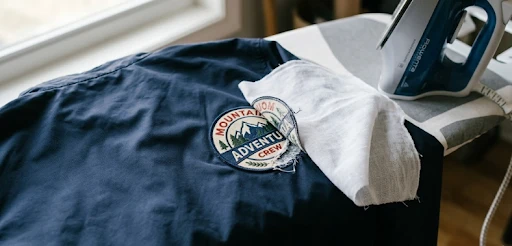
Most people grab an iron-on patch, press it onto their nylon jacket, and wonder why it peels off within days. The problem is not the patch. The problem is the fabric. Nylon behaves differently from cotton or denim, and if you skip that truth, you waste time, money, and a perfectly good patch.
In this guide, we’ll break down how nylon reacts to heat, why iron-on patches often fail on it, and what you should understand before applying one to synthetic fabrics.
Why Iron-On Patches Struggle on Nylon
Nylon is a synthetic fabric. It does not absorb heat the way natural fibers do. That single fact creates two serious problems when you try to use iron-on patches on it.
First, nylon melts. The heat required to activate the adhesive backing on most iron-on patches sits between 150°C and 180°C. Nylon starts to warp, shrink, or melt well below that range. You risk destroying the fabric before the adhesive even bonds properly.
Second, nylon repels adhesive. The tight, smooth weave of nylon gives the patch glue very little surface area to grip. Even when you apply heat carefully, the bond stays weak. Wash the item once or twice, and the patch lifts at the edges and eventually falls off.
These are not flaws in your technique. They are built into the nature of nylon itself.
Can You Put Iron-On Patches on Nylon? (Clear Answer)
Yes, you can put iron-on patches on nylon, but you need to do it with low heat and a protective barrier, and you should still expect a weaker bond than you would get on cotton or denim.
So, can you use iron-on patches with reliable, long-term results? Not without extra help. The adhesive on standard iron-on patches does not form a strong permanent bond with nylon’s smooth synthetic surface. The patch may stick initially, but it will not hold up to regular wear and washing the way it would on natural fibers.
The honest answer is this: iron-on patches work on nylon as a temporary fix, not a permanent solution. If you need the patch to stay put for months and survive machine washing, you need to reinforce the bond with stitching or use a completely different attachment method.
Materials Needed for Applying Iron-On Patches on Nylon
Before you start, gather everything you need so you do not rush the process.
- Iron-on patch of your choice from Custom Patches Australia
- A household iron with adjustable temperature settings
- A thin pressing cloth or parchment paper to protect the nylon from direct heat
- A hard flat surface like an ironing board or a firm table
- Needle and thread (strongly recommended for reinforcement)
- Fabric glue as an optional extra bonding agent
Do not skip the pressing cloth. Direct iron contact on nylon causes immediate damage.
Step-by-Step Application of Iron-On on Nylon
Follow these steps carefully to get the best possible result when applying iron-on patches to nylon fabric.
Step 1: Clean the fabric. Wash and fully dry the nylon item before you begin. Dirt, oil, or moisture on the surface will weaken the adhesive bond from the start.
Step 2: Set your iron to the lowest heat setting. Never use steam. Steam adds moisture and adds zero bonding benefit on synthetic fabric. Keep the temperature at the lowest point that still allows the adhesive to activate.
Step 3: Position the patch. Place the patch adhesive-side down exactly where you want it. Take your time here because repositioning after heat application tears the bond.
Step 4: Place the pressing cloth over the patch. This step protects the nylon from direct contact with the iron’s hot plate.
Step 5: Press firmly for 25 to 30 seconds. Apply steady downward pressure without moving the iron back and forth. Circular motion shifts the patch and creates an uneven bond.
Step 6: Let it cool completely. Do not touch or test the patch for at least one full minute after you lift the iron. The adhesive sets as it cools.
Step 7: Reinforce with stitching. Run a simple stitch around the perimeter of the patch. This single step transforms a temporary fix into a durable one and dramatically extends the life of the patch on nylon.
Best Alternatives for Nylon Fabric
When the iron-on method feels too risky or too unreliable for your nylon item, these alternatives deliver stronger, longer-lasting results.
Sew-on patches give you the most durable attachment on any fabric, including nylon. Thread does not care whether the surface is synthetic or natural. A properly sewn patch stays in place through years of wear and hundreds of washes.
Fabric glue or adhesive-backed patches designed for synthetic fabrics form a stronger chemical bond with nylon than standard iron-on adhesives. Look for products specifically labeled for use on synthetic or waterproof fabrics.
Hook-and-loop (Velcro) attachment works beautifully on tactical gear, bags, and jackets. You sew or glue the loop side onto the nylon and attach the patch with the hook side. This method also lets you swap patches in and out whenever you want.
Professional heat pressing uses commercial-grade equipment that applies consistent, calibrated heat across the full patch surface. If you want to go the iron-on route on nylon, a professional heat press gives you a far better result than a household iron.
FAQs
Will an iron-on patch ruin my nylon jacket?
It can if you apply too much heat. Always use a low setting and a pressing cloth. Direct high heat melts or warps nylon permanently.
How long does an iron-on patch last on nylon?
Without stitching, expect the patch to hold for a few weeks to a couple of months depending on how often you wear and wash the item. With stitching, it lasts significantly longer.
Can I remove an iron-on patch from nylon?
Yes. Apply gentle heat through a pressing cloth to soften the adhesive, then carefully peel the patch from one corner. Work slowly to avoid stretching or damaging the nylon.
Do iron-on patches work on waterproof nylon?
Waterproof nylon has an additional coating that makes adhesive bonding even harder. Sew-on patches or hook-and-loop systems work far better on waterproof nylon fabrics.
What type of patch backing works best on nylon?
Sew-on backing gives you the strongest hold on nylon. If you prefer iron-on patches, always reinforce them with stitching around the edges.
Buy the Right Patch For Your Use
Nylon demands a smarter approach, and now you have one. You know the risks, the right technique, and the better alternatives. Whether you choose to carefully apply iron-on patches on nylon with low heat and a pressing cloth, or you go straight to sewing for a permanent hold, the decision now comes from knowledge instead of guesswork.
Custom Patches Australia designs and supplies patches built for real-world use across all fabric types. We help you choose the right backing, the right size, and the right design so your patch looks sharp and stays exactly where you put it.