When you order custom patches, the design is only half the decision. The other half, backing, decides how well your patch stays put. Custom Patches Australia works with schools, sports clubs, motorcycle riders and businesses every week, and the same question comes up constantly: which patch backing type actually works best for what I need?
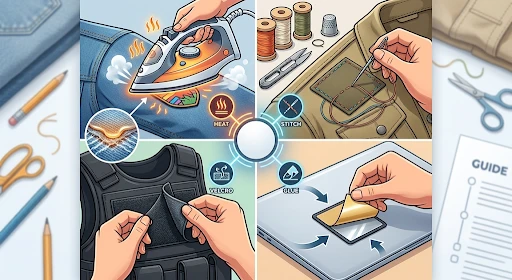
This guide breaks down the four most common patch backing types, iron-on, sew-on, velcro (hook and loop) and adhesive (peel and stick), so you can choose the right one the first time.
Whether you are outfitting a uniform, decorating a leather jacket, or building interchangeable patches for a tactical bag, understanding patch backing types will save you money, time and a few frustrated re-orders.
What Is Patch Backing and Why Does It Matter?
Patch backing is the material or method applied to the underside of a patch that determines how it attaches to fabric. It is separate from the patch face itself, which might be embroidered, woven or PVC. The right backing depends on the fabric you are attaching to, how permanent you want the placement to be, and how much wear and washing the item will see.
Choosing incorrectly is one of the most common reasons patches fall off, peel, or damage garments, so a quick primer here prevents that.
Iron-On Patch Backing
Iron-on backing, also called heat-seal or hot-melt backing, is a layer of heat-activated adhesive fused to the back of the patch. Press it with a household iron or heat press and the adhesive melts into the fabric fibres, bonding the patch in place.
Best for: cotton and polyester blends, T-shirts, caps, tote bags and light jackets.
Not ideal for: leather, nylon, waterproof fabrics, or anything that cannot handle direct heat.
Iron-on patches are popular because they need no sewing kit and can be applied in under a minute. For businesses producing patches in bulk, this backing type keeps production simple. If you want a closer walkthrough of application temperatures, pressing times and common mistakes, the iron-on patches guide covers the full process step by step.
One caveat: iron-on backing weakens with repeated washing and high heat drying. For workwear or items washed frequently, pairing iron-on adhesive with a few reinforcing stitches around the edges extends the patch’s life considerably.
Sew-On Patch Backing
Sew-on backing is the simplest option: a plain fabric back with no adhesive at all. The patch is attached entirely with needle and thread, either by hand or machine.
Best for: leather jackets, denim, backpacks, uniforms, and anything that goes through heavy wash cycles.
Not ideal for: anyone wanting a no-sew, instant application.
Because there is no glue involved, sew-on patches hold up to years of wear, washing and abrasion. Motorcycle clubs and military units almost always specify sew-on backing for exactly this reason, permanence matters more than convenience. If your patches are custom embroidered patches with fine thread detail, sew-on backing also protects the stitched design from the heat exposure that iron-on application requires.
Sewing takes longer and needs either basic hand-sewing skill or access to a machine, which is the only real downside for DIY application.
Velcro (Hook and Loop) Patch Backing
Velcro backing, more accurately called hook and loop backing, consists of two components: a hook strip sewn or glued onto the patch, and a loop strip sewn onto the garment. Press them together and the patch attaches; pull apart and it detaches instantly.
Best for: tactical gear, uniforms with rotating patches such as name tags, rank insignia or event badges, and anyone who wants to swap patches often.
Not ideal for: permanent placement or very lightweight fabric, since the loop strip needs a stable surface to be sewn onto.
Hook and loop backing is the only patch backing type designed for repeated removal and reattachment. It is the standard choice for tactical vests, security uniforms, and promotional patches that get swapped between events or seasons. The trade-off is a slightly bulkier profile and the need to attach a loop panel to the garment first, which usually requires sewing.
Adhesive (Peel and Stick) Patch Backing
Adhesive backing, or peel and stick backing, is a pressure-sensitive sticker layer protected by a paper backing. Peel the paper away, press the patch onto the surface, and it bonds instantly at room temperature, no heat and no needle required.
Best for: temporary use, non-fabric surfaces like hard hats, laptops, phone cases, or one-time event applications.
Not ideal for: garments that will be washed, since adhesive backing is not machine-wash safe and loses grip with movement or moisture.
A peel and stick patch is the fastest of all four options to apply, which makes it popular for promotional giveaways, trade show samples and quick mock-ups before committing to a larger order. It is rarely the right choice for daily-wear clothing.
Patch Backing Types Compared
Here is a quick side-by-side look at all four patch backing types before we get into specific use cases.
| Backing Type | Application Method | Durability | Best Surface | Removable? |
|---|---|---|---|---|
| Iron-On | Heat press or household iron | Moderate | Cotton, polyester blends | No |
| Sew-On | Needle and thread | High | Leather, denim, uniforms | No, without unpicking |
| Velcro (Hook and Loop) | Press-fit onto loop panel | High | Tactical gear, uniforms | Yes |
| Adhesive (Peel and Stick) | Peel and press | Low | Hard surfaces, non-washables | No |
Best Patch Backing for Jackets
Jackets see more friction, weather exposure and washing than almost any other garment, so backing choice matters more here than anywhere else. For leather and heavy denim jackets, sew-on backing is generally the best patch backing for jackets because stitching holds up against constant flexing and does not rely on adhesive that can crack in cold weather. For lighter jacket fabrics like cotton twill or polyester shells, iron-on backing works well as long as the jacket lining can tolerate heat press application.
If the jacket is part of a uniform where patches change seasonally, such as event staff jackets, security jackets or club jackets with rotating badges, hook and loop backing is worth the extra setup because it avoids re-stitching every time a patch changes.
Velcro vs Iron-On Patch: Which Wins?
This is one of the most common comparisons customers ask about, so it deserves its own breakdown.
| Factor | Velcro (Hook and Loop) | Iron-On |
|---|---|---|
| Setup time | Longer, loop panel must be sewn on first | Faster, single heat press step |
| Long-term durability | High, especially with quality hook material | Moderate, weakens with frequent washing |
| Flexibility to swap patches | Yes, unlimited swaps | No, permanent once applied |
| Equipment needed | Sewing machine or hand tools | Iron or heat press |
| Typical use case | Tactical, uniform, event patches | Retail apparel, caps, bulk orders |
In short, the velcro vs iron on patch decision comes down to whether you need flexibility or speed. Choose velcro when patches need to change. Choose iron-on when you need a fast, permanent finish on a fabric that can handle heat.
How to Choose Patch Backing: A Quick Decision Guide
Knowing how to choose patch backing starts with three questions:
- What is the garment or surface made of? Leather and nylon rule out iron-on. Hard surfaces rule out sew-on.
- Will the item be washed regularly? If yes, avoid adhesive backing entirely.
- Does the patch need to be removable? If yes, hook and loop is the only real option.
| If your priority is… | Choose this backing |
|---|---|
| Fast application, no sewing | Iron-On |
| Maximum durability | Sew-On |
| Swappable, interchangeable patches | Velcro (Hook and Loop) |
| Temporary, non-fabric use | Adhesive (Peel and Stick) |
Patch style also plays a role in this decision. A finely detailed design, for example, holds up differently depending on whether it is embroidered vs woven vs PVC patches, since flatter PVC patches pair naturally with adhesive or velcro backing, while embroidered patches are usually better suited to sew-on or iron-on. Matching backing to both fabric and patch type gives the longest-lasting result.
Once you know which backing suits your project, see our pricing to get a quick estimate based on patch size, quantity and backing type.
FAQs
Which patch backing is best overall?
There is no single best patch backing type, it depends on the fabric and how the item will be used. Sew-on backing offers the most durability, iron-on offers the most convenience, velcro offers flexibility, and adhesive offers speed for non-fabric surfaces.
Can I combine two backing types on one patch?
Yes. A common combination is iron-on backing with a stitched border, sometimes labelled iron-on with sew recommended. This gives a quick initial hold plus long-term stitched security.
Does velcro backing damage clothing?
Not if the loop panel is properly sewn on rather than glued. Stitched loop panels distribute stress evenly and do not damage the fabric underneath.
Is peel and stick backing permanent?
No, adhesive backing is designed for temporary or single-use applications. It is not recommended for machine-washable garments.
Can iron-on patches be removed later?
It is possible with careful reheating and peeling, but the adhesive residue often needs additional cleaning, and repeated heating can damage some fabrics.
What backing works best for custom patches Australia businesses ordering in bulk?
For bulk orders across schools, sports clubs and corporate uniforms, iron-on backing is the most common choice because of its speed, though sew-on remains popular for uniforms needing long-term durability.
Do hook and loop patches need a special panel sewn on first?
Yes. The loop side must be attached to the garment before the hook-backed patch can be applied, which is a one-time setup per garment.
Picking the Right Patch Backing for Your Project
Patch backing types are not one-size-fits-all, and the right choice depends on your fabric, your durability needs and whether patches need to be removable. Iron-on suits fast, permanent application on light fabrics.
Sew-on delivers the strongest hold for jackets, uniforms and leather. Velcro backing gives you the freedom to swap patches whenever you like. Adhesive backing works best for short-term or non-fabric use.
If you are still unsure which option fits your project, our team at Custom Patches Australia can help match the right backing to your exact fabric and use case.