
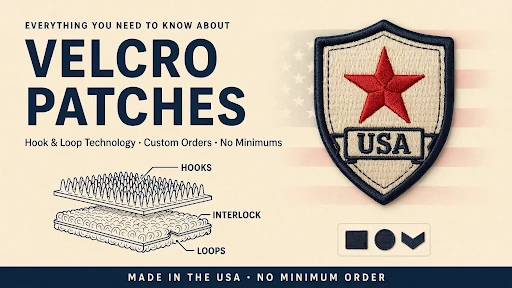
Velcro patches, also known as hook-and-loop patches, have gone from a niche military accessory to one of the most popular patch formats in Australia. Whether you’re kitting out a tactical vest, customising a cap, outfitting a sports team, or running a brand that needs swappable patch options, velcro patches offer a level of flexibility that sew-on and iron-on backings simply can’t match. This is the definitive Australian guide, covering everything from how they work to how to order your own.
What Are Velcro Patches?
Velcro patches are fabric patches, embroidered, woven, printed or PVC patches, that have a hook-and-loop fastener (commonly called Velcro) on the back instead of iron-on glue or a plain sew-on edge. The patch sticks to any surface lined with the complementary loop material, making it fully removable, repositionable, and interchangeable without tools, thread, or heat.
“Velcro” is technically a trademarked brand name (like Biro or Band-Aid), but the term has become the universal descriptor for all hook-and-loop fastener systems. In the patch industry, you’ll encounter the terms velcro patch, hook-and-loop patch, hook-back patch, and loop-back patch, they all refer to the same concept.
Velcro patches are the dominant format in:
- Military and law enforcement insignia and identification
- Tactical and airsoft gear
- Morale patches (unofficial, often humorous military/civilian patches)
- Branded hats and caps with swappable front patches
- Workwear and hi-vis garments with interchangeable name/role patches
- Sports and outdoor gear
- Children’s clothing and school bags
How do Velcro patches work?
A velcro patch works via a two-part hook-and-loop system. The back of the patch carries the “hook” side, a stiff woven fabric covered in thousands of tiny plastic hooks. The garment or surface has the “loop” side, a soft, fluffy material made of interlocking loops. When pressed together, the hooks catch the loops and hold firm with significant gripping force. Pulling the two apart at an angle breaks the engagement, releasing the patch cleanly. The system can be opened and closed thousands of times without a meaningful loss of grip.
The Science Behind Hook-and-Loop Fasteners
The hook-and-loop fastener was invented in 1941 by Swiss engineer George de Mestral, who noticed how burdock seed burrs clung to his dog’s fur using tiny hooked structures. The commercial product, Velcro, was patented in 1955. Today, industrial-grade hook-and-loop systems are used in aerospace, military equipment, medical devices, and everyday consumer goods.
For patches specifically, the key properties are:
- Grip force: A 5 cm × 5 cm piece of quality hook-and-loop can resist approximately 5–10 kg of shear force, more than enough to hold any patch securely during normal wear
- Cycle life: Industrial hook-and-loop is rated for 5,000–20,000 attach/detach cycles before significant strength loss
- Temperature resistance: Standard nylon hook-and-loop handles temperatures from −40°C to +80°C, covers every Australian climate condition
- Water resistance: The fastening system itself is not degraded by water; it works wet or dry
Did You Know?
The US military adopted the hook-and-loop fastener extensively in the 1990s and 2000s. Modern military uniforms like the USMC MCCUU and ADF Multi-Cam patterns are loaded with loop panels specifically to accommodate velcro-backed patches, rank insignia, and identification systems, allowing soldiers to change patches in seconds rather than unstitching and re-stitching.
Anatomy of a Velcro Patch — Layer by Layer
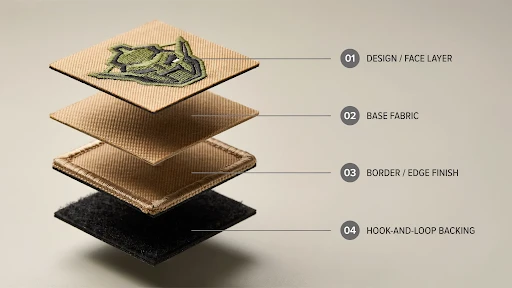
Understanding what makes up a quality Velcro patch helps you make better decisions when ordering or applying them. A well-made Velcro patch has four distinct layers:
1. Design / Face Layer
The visible front is embroidered thread, woven patch jacquard, moulded PVC, or printed fabric. This is where your artwork, logo, or message lives.
2. Base Fabric
Usually polyester twill, canvas, or rubber. Provides structural rigidity and a clean surface for the border finishing.
3. Border / Edge Finish
Merrowed overlock edge (most common), laser-cut heat-sealed edge, or folded edge. Prevents fraying and frames the design cleanly.
4. Hook-and-Loop Backing
The hook side (rough, scratchy) is bonded or sewn to the entire back face. Loop side lives on the garment/hat/bag. Usually black or tan for military applications.
Hook Side vs Loop Side — Which Goes Where?
The hook (rough/scratchy) side belongs on the patch. The loop (soft/fluffy) side belongs on the garment. This is the near-universal convention because:
- Hook fabric against the skin is uncomfortable and can scratch, keeping it on the patch avoids skin contact
- Loop panels on garments look and feel like soft fabric, keeping the uniform clean and professional even when no patch is worn
- Replacing a worn patch (with a new hook backing) is cheaper than replacing the entire garment’s loop panel
Check First
Some hat manufacturers (especially snapback cap brands) fit their loop panels in a specific way, occasionally with the loop on the patch and hook on the hat for aesthetic reasons. Always check your specific surface before ordering or applying patches. When in doubt, order a single patch with a hook backing and test attachment before committing to a bulk run.
Types of Velcro Patches
Velcro patches span multiple construction types. The “velcro” refers to the backing, the face of the patch can be made in any format. Here’s a full breakdown:
| Patch Type | Face Construction | Best For | Detail Level | Durability | Typical Use |
| Embroidered Velcro | Stitched thread on twill | Logos, crests, clubs, brands | Medium–High | Five Star | Uniforms, hats, gear |
| PVC / Rubber Velcro | Moulded soft rubber/PVC | Tactical, military, outdoor | 3D relief detail | Five Star | Plate carriers, packs, vests |
| Woven Velcro | Thin woven jacquard | Fine text, complex logos | Very High | Five Star | Rank tabs, label-style patches |
| IR / Infrared Velcro | Reflective IR-visible material | Military IFF (friend/foe ID) | Functional | Five Star | Combat vests, helmets |
| Printed / Sublimated Velcro | Dye-sublimated on fabric | Photo-quality, flags, maps | Photographic | Three Star | Event patches, maps, novelty |
| Leather Velcro | Debossed/printed leather | Premium fashion, bikers use | Medium | Four Star | Caps, jackets, bags |
| Reflective Velcro | Retroreflective material | Hi-vis, night visibility | Functional | Five Star | Workwear, cycling, and emergency |
| Morale Patch (Velcro) | Usually embroidered or PVC | Personal expression, humour | Medium–High | Four Star | Hats, bags, tactical gear |
| Flag Patch (Velcro) | Embroidered or woven | National/unit identification | High | Five Star | Uniforms, travel bags, helmets |
Velcro Patches vs Sew On vs Iron On — Full Comparison
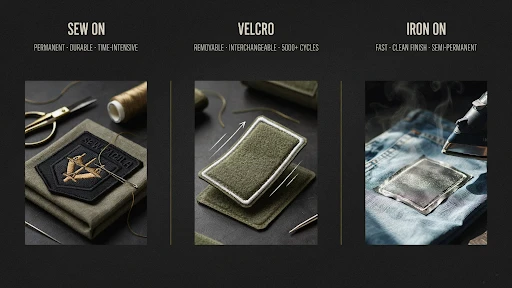
Choosing the right patch backing is one of the most important decisions before ordering. Here’s how Velcro stacks up against the alternatives across every key factor:
Sew On
Sew on patches provide the following characteristics:
- Permanently stitched to fabric
- Most durable long-term
- No extra surface needed
- Not removable without unpicking
- Time-intensive to apply
- Works on any fabric
- No swap capability
Velcro
Velcro patches are specifically:
- Most Flexible
- Hook-and-loop, removable & interchangeable
- Fully interchangeable patches
- On/off in seconds, no tools
- Rated 5,000+ cycles
- Needs a loop panel on the garment
- Ideal for tactical & branded use
Iron On
Key features of iron on patches Australia are:
- Professional, clean finish
- Heat-activated adhesive backing
- Fastest application (30–60 sec)
- No sewing or tools needed
- Can peel after washing
- Not suitable for nylon or leather
- Semi-permanent at best
- No repositioning once applied
| Criteria | Velcro / Hook-Loop | Sew On | Iron On |
| Interchangeable? | Yes, unlimited swaps | No | No |
| Application time per patch | 2 seconds | 15–35 min by hand | 30–60 seconds + cooling |
| Works on nylon / synthetic | Yes | Yes (with correct needle) | No, heat melts synthetics |
| Works on leather | Yes | Yes (leather needle) | No damages leather |
| Machine washable? | Yes (fastened during wash) | Yes | Risk of peeling in hot wash |
| Requires surface prep? | Loop panel needed on the garment | No prep required | No prep required |
| Multiple patches, one garment? | Ideal, swap any patch instantly | But each takes time | But permanent once applied |
| Best for uniforms? | Strongly preferred | Good for permanent rank | Not recommended |
| Best for fashion? | Good for branded hats | Most durable for jackets | Convenient for casual wear |
Recommendation
For any application where patches need to change, role/rank indicators on workwear, event-specific branding, personal expression on tactical gear, or hats with seasonal patches, Velcro is the clear winner. For permanent branding on garments that never change, sew-on is more reliable. Many professional users order patches with both sew-on and velcro options and use each where appropriate.
What Are Velcro Patches Used For?
The versatility of hook-and-loop backing means velcro patches appear across an enormous range of industries and use cases in Australia. Here’s a comprehensive breakdown:
MILITARY & DEFENCE
Unit insignia, rank tabs, flag patches, IR identification patches, and name tapes on ADF and allied force uniforms.
TACTICAL & AIRSOFT
Plate carriers, MOLLE gear, tactical vests, helmets, and airsoft uniforms. Morale patches are core to airsoft culture.
LAW ENFORCEMENT / SECURITY
Badge identification, role designation patches, unit patches on tactical vests and hi-vis gear.
BRANDED CAPS & HATS
Structured caps with loop-lined front panels allow brand logos and seasonal designs to be swapped instantly.
WORKWEAR & HI-VIS
Company name patches, role/department designations, and site-specific identification easily changed between jobs.
SPORTS & CLUBS
AFL, rugby, cricket, cycling, and motorsport clubs use velcro patches on kit bags, caps, and training jackets for easy branding updates each season.
OUTDOOR & ADVENTURE
Hiking packs, climbing harnesses, kayaking vests, and camp gear. Velcro patches take water, dust, and UV without issue.
SCHOOL & YOUTH GROUPS
Scouts, cadets, youth clubs, and school bags. Velcro makes it easy for kids to attach and collect achievement badges without sewing.
AVIATION & AEROSPACE
Pilot wing badges, mission patches, airline crew identification. NASA-style mission patches with velcro are a popular collector category.
PROMOTIONAL MERCHANDISE
Event patches, conference lanyards, trade show giveaways, velcro patches are a step up from standard merch and get kept, worn, and displayed.
Marketing tool
Military & Tactical Velcro Patches in Australia
The intersection of the military, tactical, and outdoor communities is where Velcro patches have their deepest roots and most technical requirements. Here’s what you need to know about military-grade velcro patch systems in the Australian context.
ADF (Australian Defence Force) Patch Systems
The Australian Defence Force uses hook-and-loop patch systems on current-issue uniforms, including the DPCU (Disruptive Pattern Camouflage Uniform) and Multi-Cam variants. Velcro panel locations on ADF uniforms typically include:
- Upper sleeves — unit insignia, formation patches
- Chest panel — name tapes, rank slides
- Plate carrier/body armour — IFF patches, blood type, flag patches
- Helmet covers — IR (infrared) patches, national flag
IR (Infrared) Velcro Patches
IR patches, infrared identification patches, are a critical piece of military equipment. Invisible to the naked eye but brilliant under night vision devices (NVDs), IR patches allow personnel to identify friendly forces in low-visibility conditions. They are almost universally velcro-backed for quick removal when stealth is required. Custom IR flag patches and unit insignia in IR format are available through specialist tactical patch suppliers.
Tactical Gear Compatibility
Most major plate carrier brands, Crye Precision, Spiritus Systems, Ferro Concepts, and their Australian equivalents, include loop-lined panels on the front, back, and shoulder areas specifically for velcro patch attachment. MOLLE-compatible pouches and packs often also include loop panel sections. When speccing out velcro patches for tactical gear, confirm the loop panel dimensions to ensure your patch fits within the panel boundary.
Airsoft Velcro Patches in Australia
The Australian airsoft and tactical simulation community is a major consumer of Velcro patches. Airsoft players use patches for:
- Team identification during CQB (close quarters battle) and field games
- Role designation (medic, team lead, sniper)
- National flag identification on helmets and vests
- Morale patches for personal expression between games
- Event-specific patches for op-days and milsim events
| Tactical Use Case | Patch Type | Size Range | Colour | Hook Colour |
| Unit / Formation Insignia | Embroidered | 8–12 cm | Subdued (khaki/olive/navy) | Black or Tan |
| National Flag (sleeve) | Embroidered or Woven | 5×3 cm to 8×5 cm | Full colour or subdued | Black |
| IR Identification | IR-reflective material | 5×3 cm | Visible: OD Green; NVG: bright | Black |
| Blood Type Tab | Embroidered or woven | 5×2 cm | Red on black (subdued) | Black |
| Name / Callsign Tape | Woven or embroidered | 10–14 cm × 2 cm | Subdued; tan on OD | Black or Tan |
| Morale / Fun Patch | PVC or embroidered | 7–10 cm | Any | Black or Tan |
| MEDEVAC / Medic Cross | Embroidered or PVC | 5–8 cm | Red cross on white or subdued | Black |
Morale Patches Australia
What are morale patches?
Morale patches are unofficial, often humorous, personalised, or symbolic patches worn by military personnel, law enforcement, emergency services workers, and civilians on tactical gear, hats, and bags.
Almost always velcro-backed for easy swap, morale patches range from funny internet memes and irreverent slogans to unit-specific inside jokes and heartfelt memorial designs. They originated in the US military but are now a global phenomenon with a thriving Australian community.
Why Morale Patches Matter
Morale patches serve a genuine psychological function in high-stress professions, they’re a sanctioned form of identity, humour, and individuality within environments that otherwise demand uniformity. For civilians, they’re a form of self-expression that bridges military culture and streetwear aesthetic.
Popular Morale Patch Categories in Australia
| Category | Examples | Audience | Format |
| Humorous / Meme Patches | “I’d Rather Be Sleeping”, punny call signs, internet meme art | Military, airsoft, general | PVC or embroidered |
| Australian Patriotic | Southern Cross, kangaroo, “Straya”, digger tributes | All Australians | Embroidered or PVC |
| Unit / Callsign Patches | Custom unit art, deployment patches, FOB names | ADF, allied veterans | Embroidered |
| Skill / Qualification | Sniper, EOD, medic, combat diver, free-fall | Military, emergency services | Embroidered or woven |
| Memorial / Tribute | Fallen comrade tributes, “Lest We Forget”, unit scrolls | Veterans, families | Embroidered (subdued or full colour) |
| Outdoor / Adventure | National park logos, trail badges, surf patches | Hikers, surfers, travellers | PVC or embroidered |
| Pop Culture / Fan | Gaming, sci-fi, TV show references (original art) | Gamers, enthusiasts | PVC preferred |
| Political / Awareness | First responder support, charity awareness | Emergency services, general | Embroidered |
Morale Patch Etiquette — What Australians Should Know
For serving ADF members, morale patches are generally restricted to off-duty wear, unofficial kit, and approved gear locations, never on official parade or service dress. Unit commanders may have specific rules about what’s acceptable on deployed gear. On civilian tactical gear, airsoft uniforms, or personal kit bags, there are no rules, the more expressive the better.
Velcro Patches for Hats & Caps — Everything You Need to Know
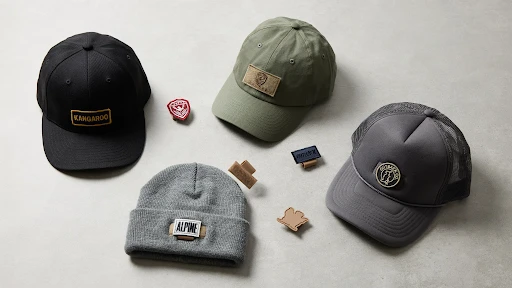
One of the fastest-growing velcro patch applications in Australia is the structured cap with an interchangeable velcro front patch. This format, pioneered by tactical cap brands and adopted by streetwear labels, has exploded into mainstream fashion and promotional merchandise.
How Velcro Patch Hats Work
Caps designed for velcro patches have a loop panel sewn into the front face of the crown. The patch, typically 6–8 cm wide, sits on this loop panel and attaches with a hook backing. Because the patch is removable, one cap can serve many purposes: swap the company logo for a team badge for a weekend game, or change seasonal designs without buying new hats.
Types of Caps Compatible with Velcro Patches
- Structured snapback caps — the most common velcro patch hat style; the stiff front panel holds the patch flat
- Tactical / operator caps — typically ranger green, coyote tan, or black; designed from the factory with a loop panel
- Trucker hats — foam/mesh combo; the foam front panel accommodates a small loop section
- Dad hats / unstructured caps — less ideal (soft front panel can cause patches to buckle), but works with smaller patches under 6 cm
- Beanies with front panel — some fitted beanies include a loop section; popular for ski/snow season
Branding Tip
Ordering caps with a built-in loop panel plus a set of interchangeable velcro patches is one of the most cost-effective promo merchandise strategies available. One cap body + 3–4 seasonal patch designs = a versatile, reusable product your audience will actually wear. The per-unit cost of patches is significantly lower than reordering entire caps.
Velcro Patch Size Guide for Hats
| Cap Style | Recommended Patch Width | Recommended Patch Height | Shape |
| Standard structured snapback | 7–8 cm | 5–6 cm | Rectangular, shield, round |
| Tactical operator cap | 6–7.5 cm | 4.5–5.5 cm | Rectangle or custom shape |
| Trucker hat | 6–7 cm | 4–5 cm | Rectangle or oval |
| Dad hat (unstructured) | 5–6 cm | 4–5 cm | Round or oval preferred |
How to Attach Velcro Patches — Application Methods
Applying a velcro patch system involves two tasks: attaching the loop panel to your garment/gear, and then attaching the patch to the loop panel. Here’s the complete guide.
Step 1: Attach the Loop Panel to Your Garment
If your garment doesn’t already have a loop panel (many tactical vests, caps, and uniforms do), you’ll need to add one. Three methods:
Sewing (Recommended — Most Durable)
Cut the loop tape to size. Position the garment and run a straight stitch around all four edges, 2–3 mm inside the border. Use a thread matching the garment colour. This is the professional method, it will outlast the garment itself and survive unlimited machine washing.
Iron-On Loop Tape (Quick — Good for Cotton & Polyester)
Many loop tapes come with a heat-activated adhesive backing. Position the loop tape, cover with a pressing cloth, and iron at medium heat for 20–30 seconds. Press firmly across the entire surface. Not suitable for nylon, leather, or heat-sensitive fabrics. Reinforce with a stitch around the edge for garments that will be washed frequently.
Self-Adhesive Peel-and-Stick (For Bags, Helmets, Hard Surfaces)
Peel the backing from the adhesive loop tape and press firmly onto a clean, dry surface. Best for HDPE, nylon shells, and smooth surfaces. Not ideal for woven garments as the adhesive doesn’t bond well to open-weave fabrics over time. Useful for non-fabric tactical gear and kit bags.
Step 2: Attach the Patch to the Loop Panel
Centre the Patch
Hold the patch hook-side down over the loop panel. Align visually, use the loop panel edges as guides. For small patches on large panels, finding the visual centre before pressing is important for a clean result.
Press Firmly
Press down with firm, even pressure across the entire patch face. You’ll hear and feel a slight crunch as the hooks engage the loops. Run your thumb around all edges to ensure complete contact.
Test the Grip
Gently tug each corner. If a corner lifts easily, press again with more force. A properly engaged velcro patch should require deliberate effort to remove, it should not slide or shift under normal wear.
Remove by Peeling at an Angle
When you want to change the patch, peel from one corner at a 45° angle rather than pulling straight off. This uses less force and extends the life of both the hook and loop materials. Never yank a patch off, gradual peeling preserves both sides.
Washing Note
Before putting any garment with a velcro patch system into the washing machine, fasten the patch to its loop panel or cover the hook side with a piece of scrap loop fabric. Exposed hook material in the wash will snag delicate fabrics and lint like crazy. This is the single most important maintenance tip for velcro patch systems.
Custom Velcro Patches Australia — Your Complete Ordering Guide
Ordering custom velcro patches in Australia has never been easier. Whether you need 10 pieces for a weekend event or 5,000 pieces for a national uniform rollout, here’s exactly what to expect and how to get the best result.
What to Decide Before You Order
| Decision | Options | Our Recommendation |
| Patch Type / Face | Embroidered, PVC, Woven, Printed | Embroidered for most; PVC for outdoor/tactical |
| Size | Any, from 3 cm badges to 30 cm back patches | 5–10 cm for standard applications; confirm against your loop panel |
| Shape | Rectangle, circle, shield, custom die-cut | Rectangle or custom shape matching your design’s natural form |
| Hook colour | Black, Tan/Coyote, White, OD Green | Black for most; Tan for coyote/khaki gear |
| Border / Edge | Merrowed, laser-cut, folded | Merrowed for durability; laser-cut for clean custom shapes |
| Thread count (embroidered) | 50–100% fill coverage | 75–85% for most designs; 100% for solid bold logos |
| Artwork format | AI, EPS, PDF, PNG (300 dpi min) | Vector (AI/EPS) always preferred for sharpest result |
| Quantity | As low as 10 pieces | Order 10–20% more than needed for replacements |
Design Your Custom Velcro Patches Today Australia’s trusted custom patch supplier, embroidered, PVC, and woven velcro patches with free artwork assistance, competitive pricing, and fast turnaround shipping across all of Australia. Get a Free Quote
| Design Your Custom Velcro Patches Today
Australia’s trusted custom patch supplier, embroidered, PVC, and woven velcro patches with free artwork assistance, competitive pricing, and fast turnaround shipping across all of Australia. |
Where to Buy Velcro Patches in Australia
| Source | Best For | Custom? | Stock Range | Price |
| Custom Patches Australia | Custom designs, logos, clubs, military, brands | Yes, full custom | N/A, made to order | $$ – $$$ (volume discounts) |
| Military Surplus Stores (AUS) | Military insignia, flag patches, tactical | Stock only | ADF, US, allied insignia | $ |
| Tactical Gear Retailers (online) | Morale patches, tactical brands | Stock only | Wide morale patch selection | $–$$ |
| Etsy Australia | Unique, artistic, indie designs | Some sellers | Very wide variety | $–$$ |
| Amazon AU | Bulk morale patches, generic designs | No | Mostly imported stock | $ |
| Airsoft / Tactical Forums | Community patches, group orders | Group orders | Limited to community runs | $–$$ |
| Sporting Goods Stores | Generic sport/outdoor patches | No | Very limited | $ |
Velcro Patches Near Me — Brisbane, Sydney, Melbourne & Beyond
If you’re searching for velcro patches near me in Brisbane, Sydney, Melbourne, Perth, Canberra, or anywhere else in Australia, Custom Patches Australia ships nationwide with fast dispatch. For local walk-in browsing, military surplus stores and tactical gear retailers are your best bet for ready-made velcro patches in most major Australian cities. For custom work, an online quote and order process is typically faster and more cost-effective than sourcing a local embroiderer for velcro-backed patches.
Care & Maintenance for Velcro Patches
Keeping your velcro patch system in top condition extends its usable life significantly. The hook material is particularly vulnerable to lint accumulation and flattening from improper washing.
Washing Velcro Patch Garments
- Always fasten patch to loop panel before washing, or cover the hook side with a scrap of loop tape to prevent snagging
- Cold to warm wash (30–40°C), hot water can weaken adhesive on iron-on loop panels over time
- Turn garment inside out to reduce friction and protect the loop panel
- Avoid fabric softener on loop panels, softener coats the fibres and reduces grip strength
- Air dry or low-heat tumble, high dryer heat can cause delamination on glued loop panels
Restoring Grip — What to Do When Velcro Loses Strength
Over time, loop panels collect lint, hair, and fibres that fill the loops and reduce grip. This is the most common cause of velcro “not sticking” complaints, and it’s easily fixed:
- Use a lint roller over the loop panel to collect surface debris
- Use a stiff-bristle toothbrush or fine-tooth comb to gently brush out embedded fibres from the loops
- For heavily clogged loop panels, use a piece of hook tape pressed firmly, then peeled, it strips debris out efficiently
- Wash the garment with the loop panel exposed (no patch attached) to allow water and agitation to flush debris out
Lifespan Tip
The hook side on a patch rarely wears out under normal use, industrial hook tape is rated for thousands of cycles. The loop panel on the garment is the higher-wear side. When a loop panel finally does wear out, it can be replaced: have a tailor sew a new loop panel over the worn one at low cost, giving your garment a completely fresh grip surface.
Frequently Asked Questions
What are velcro patches, and how are they different from normal patches?
Velcro patches (also called hook-and-loop patches) are patches with a hook-and-loop fastener on the back instead of iron-on glue or a plain sew-on edge. The key difference from regular patches is interchangeability, a velcro patch can be attached and removed in seconds, hundreds or thousands of times, without damaging the patch or the garment.
How do Velcro patches work?
Through a two-part hook-and-loop system. The patch back has the hook side (rough, scratchy, tiny plastic hooks woven into fabric). The garment, hat, or surface has the loop side (soft, fluffy, interlocking fabric loops). When pressed together, hooks catch loops and hold. Pulling at an angle breaks the hooks free. The system is reversible, rated for thousands of cycles, and works in any weather.
What side of velcro goes on the patch?
The hook side (rough, scratchy) goes on the back of the patch. The loop side (soft, fluffy) goes on the garment, cap, bag, or surface. This is the universal convention, it keeps the scratchy material away from skin, and keeps the garment surface looking clean when no patch is worn. Some hat brands reverse this, so always check your specific product before ordering.
Are velcro patches durable? How long do they last?
Very durable. Industrial-grade hook-and-loop is rated for 5,000–20,000 attach/detach cycles. The patch face (embroidered, PVC, woven) is as durable as any standard patch. The loop panel on the garment is the higher-wear element and can lose grip over time due to lint accumulation, easily cleaned with a lint roller or toothbrush. A properly maintained velcro patch system should last many years under normal use.
Can velcro patches go in the washing machine?
Yes, with one important precaution: always fasten the hook side to a loop panel (or cover it with scrap loop fabric) before washing. Exposed hook material in the wash will snag everything it touches, other garments, delicate fabrics, lint. Beyond that: cold to warm wash, avoid fabric softener on loop panels, and air dry or low-heat tumble. The hook-and-loop system handles machine washing perfectly when properly managed.
Can you add velcro to an existing patch you already own?
Yes. For an existing iron-on or sew-on patch, you can: (1) Glue a self-adhesive hook tape piece to the back of the patch, works for lighter patches on bags and hats. (2) Sew a hook tape square to the back of the patch by hand or machine. (3) Have a tailor do it for you, many alterations shops will sew velcro onto patches for a few dollars. Similarly, sew or iron a corresponding loop panel onto the destination garment.
What are morale patches and do they all have velcro?
Morale patches are unofficial, often humorous or personalised patches worn by military, tactical, and civilian users on gear, hats, and bags. They exist to express identity, unit pride, or just a good laugh. Almost all morale patches come with hook-and-loop (velcro) backing, this is the defining feature of the format. The velcro backing means you can swap morale patches between different pieces of kit in seconds, which is why the format became the standard.
What’s the difference between velcro patches and hook-and-loop patches?
They are the same thing. “Velcro” is a brand name (like “Hoover” for vacuum cleaners) that has become the common descriptor for all hook-and-loop fastener systems. Hook-and-loop is the generic technical term. In the patch industry, “velcro patch,” “hook-back patch,” “loop-back patch,” and “hook-and-loop patch” are all used interchangeably. When ordering, specify which side you want on the patch back (usually hook/rough).
How do I attach a loop panel to a plate carrier or tactical vest?
Most modern plate carriers already have loop panels integrated. Check your specific carrier, Crye, Spiritus, Ferro, and most others include loop fields on the front and/or back. If your carrier doesn’t have one, the easiest retrofit is sewing a loop tape panel onto the outer shell of the carrier. Use a heavy-duty needle and polyester or nylon thread. Alternatively, some loop panels come with MOLLE-compatible attachment hardware that threads through the webbing without sewing.
Why isn’t my velcro patch sticking properly?
The most common causes: (1) Lint-clogged loop panel, clean with a lint roller or fine-tooth comb. (2) Loop panel not fully engaged, press the patch more firmly and ensure full contact across the entire surface. (3) Fabric softener residue, fabric softener coats loop fibres and dramatically reduces grip; wash the loop panel without softener. (4) Wrong hook/loop orientation, confirm hook is on patch, loop on garment, not reversed. (5) Worn-out loop panel, if the loops are compacted flat from heavy use, the panel may need replacing.
Can I order custom velcro patches with just a few pieces?
Yes. Custom Patches Australia offers custom velcro patches from as few as 10 pieces, making it accessible for individuals, small clubs, airsoft teams, and small businesses. Per-unit cost is higher at low quantities but decreases significantly with volume. Contact us for a free no-obligation quote at any quantity, get your quote here.
What is the best size for a velcro patch on a hat?
For most structured snapback and tactical caps, 7–8 cm wide by 5–6 cm tall is the sweet spot. This fills the front panel nicely without hanging over the edges. For dad hats and unstructured caps, keep it under 6 cm wide to prevent the patch from buckling on the soft front panel. Confirm the loop panel dimensions on your specific cap before ordering, panel sizes vary between brands.
Are there velcro patches compatible with ADF (Australian Defence Force) uniforms?
Yes. ADF Multi-Cam and DPCU uniforms include hook-and-loop loop panels at standardised locations (sleeve, chest, body armour interface). Velcro-backed patches for these locations, including flag patches, unit insignia, name tapes, and rank slides, are compatible. For formal/parade dress, patch placement follows ADF dress regulations. For field and tactical wear, unit commanders have some discretion. Custom Patches Australia can produce ADF-compatible patches in approved colour schemes and sizes, see our military patches page.
Where can I buy velcro morale patches in Australia?
For ready-made stock morale patches: military surplus stores, tactical gear retailers (online and physical), Etsy sellers, and Amazon AU all carry velcro morale patches with varying selection. For custom morale patches, your own design, callsign, unit art, or inside joke, Custom Patches Australia produces fully custom embroidered and PVC morale patches with hook backing from small runs to bulk orders, shipped anywhere in Australia.
What is a velcro loop panel, and where do I get one?
A loop panel is the soft, fluffy half of the velcro system that attaches to your garment or surface, patches then stick to it. Loop panels come as: cut-to-size loop tape (available from haberdashery stores, Spotlight, Lincraft, and online), or as full panels sewn directly into garments during manufacture. For custom-sized panels, you can buy loop tape by the metre and cut to your required dimensions. It can be attached by sewing (recommended), iron-on adhesive, or peel-and-stick, depending on your surface.
Can Velcro patches be used on hi-vis and workwear?
Absolutely, this is a highly practical application. Velcro patches on hi-vis workwear allow companies to use one vest across multiple roles (different name patches, different department patches, different site-specific ID patches) without buying separate garments. This is particularly valuable for labour hire, multi-site construction, and emergency services. Sew loop panels onto the chest of your hi-vis vests once, then swap patches as roles and personnel change. Custom embroidered velcro patches for workwear are one of our most popular products.
The Velcro Patch Advantage
Velcro patches represent the smartest, most flexible approach to patch application available today. The hook-and-loop system has been battle-tested across military operations worldwide, proven in extreme outdoor conditions, and embraced by everyone from ADF personnel to streetwear enthusiasts in Australia’s major cities. The reason is simple: no other backing type gives you the same combination of strength, durability, and infinite interchangeability.
Whether you’re outfitting a tactical unit, branding a fleet of workwear vests, expressing your personality through morale patches on your kit, or building a cap brand with swappable seasonal designs, velcro patches are the professional’s choice.
Custom Patches Australia supplies premium velcro-backed embroidered, PVC, and woven patches to customers across Brisbane, Sydney, Melbourne, Perth, Adelaide, Canberra, and every corner of the country. Our team handles artwork, production, and shipping, all you need is an idea.