Anyone ordering branded patches for the first time eventually lands on the same dilemma: embroidered patches vs woven patches vs PVC patches. Which one actually suits my design?
It is a fair question, because these three patch types look different, cost different amounts, and perform differently depending on where they end up, whether that is a footy jumper, a corporate polo or a set of workwear built for the outback.
Getting this decision right matters more than most people expect. A design with fine detail can lose clarity on the wrong patch type. A patch destined for outdoor or trade work needs to survive sun, sweat and washing.
Budgets stretch further when the patch type matches the artwork rather than fighting against it. This guide runs through each option in detail, compares them head to head, and points you towards the right choice depending on your industry.
Which Patch Type Should You Choose?
If you only have a minute, here is the short version. Choose embroidered patches for a classic, textured look that suits uniforms, sporting clubs and workwear. Choose woven patches when your logo has fine text or intricate detail that embroidery thread cannot capture cleanly.
Choose PVC patches when the patch needs to handle rain, sun, mud or salt water without deteriorating. For something different again, chenille and leather patches offer a distinctive finish worth considering for niche branding.
Now, onto the detail behind each option.
What Are Embroidered Patches?
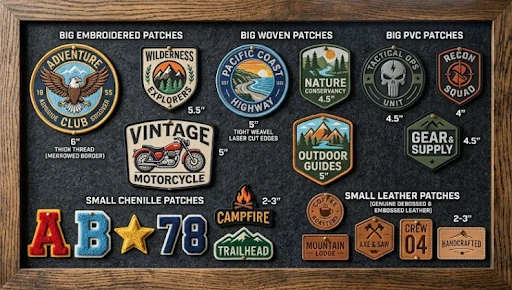
Embroidered patches are produced by stitching thread onto a twill fabric base using computerised embroidery machines, building up a raised, textured design that has been the standard patch style for generations across Australia, from school badges to defence force insignia.
Pros
- Long-lasting durability. Thread stitching withstands years of washing and daily wear, which is why embroidery remains the default for uniforms and workwear.
- Distinct raised texture. The tactile, three-dimensional finish gives patches a premium feel that flat alternatives cannot match.
- Trusted, traditional appearance. Clubs, schools and emergency services favour embroidery because it reads as authentic and established.
- Reliable colour retention. Quality thread keeps its colour through repeated washing and sun exposure.
Cons
- Struggles with fine detail. Small text and thin linework can blur or disappear given the minimum stitch width of thread.
- Cost rises with complexity. More colours and denser stitching add production time and expense.
- Base fabric can show through. Highly intricate designs sometimes reveal small gaps of backing fabric between stitched areas.
This is really the heart of the embroidery patch difference conversation: embroidery excels at bold, simple designs but is not built for photographic detail.
What Are Woven Patches?
Woven patches are manufactured on a loom, with fine polyester threads woven directly into the fabric to form the design, rather than stitched on top of it. The result is a flatter, smoother patch with far greater capacity for detail than embroidery.
When comparing woven patches vs embroidered patches, the deciding factor is usually detail. If a logo includes small text, gradients or a busy design, a woven patch is generally the better technical fit.
Pros
- Superior fine detail. The tight weave renders small text and complex artwork with much greater accuracy than thread stitching.
- Low, flat profile. Sits neatly on caps, bags and lightweight garments without adding bulk.
- Often more economical for detailed logos. Without the thread build-up of embroidery, intricate designs do not carry the same cost premium.
- Comfortable against skin. The smooth surface suits placement near collars or cuffs.
Cons
- Less texture and depth. Some customers prefer the raised feel of embroidery, and woven patches sit flatter by comparison.
- Reads as more modern. Not always the right fit for heritage brands or traditional military-style badges.
- Flatter visual impact. Colours sit closer to the surface, so the finished patch has less dimension than embroidery.
What Are PVC Patches?
PVC patches are moulded from soft, flexible polyvinyl chloride poured into a custom mould and cured into a rubber-like patch with crisp, raised edges. Demand for PVC patches Australia has grown steadily among tactical, outdoor, marine and hospitality brands that need a badge built to survive tough conditions.
Pros
- Completely waterproof. PVC will not fray, fade or soak up moisture, making it ideal for outdoor work, boating and coastal conditions.
- Vibrant, saturated colour. PVC holds bold colour extremely well, in either a glossy or matte finish.
- Distinctive 3D look. The moulded, raised design creates a look that stands apart from fabric-based patches.
- Easy to maintain. Simply wipe them clean. They are resistant to dirt, mud and general grime.
Cons
- Heavier and stiffer. PVC does not have the flexibility of fabric patches, which can feel bulky on lighter garments.
- Mould cost affects small orders. The custom mould required means very small runs can cost more per unit than fabric options.
- Less formal aesthetic. The rugged, rubbery look does not suit every brand, particularly traditional corporate uniforms.
Comparison Table: Embroidered vs Woven vs PVC Patches
| Feature | Embroidered Patches | Woven Patches | PVC Patches |
| Texture | Raised, tactile stitching | Flat, smooth finish | 3D moulded, rubbery surface |
| Detail capability | Best for bold, simple designs | Best for fine text and detail | Best for bold shapes and logos |
| Durability | Very high | High, resists fraying | Very high, fully waterproof |
| Cost for detailed artwork | Higher | Lower to moderate | Moderate, higher for small runs |
| Weather resistance | Good, not waterproof | Good, not waterproof | Excellent, fully waterproof |
| Typical use | Uniforms, clubs, workwear | Corporate branding, detailed logos | Outdoor, tactical, marine gear |
| Overall feel | Traditional and premium | Modern and sleek | Bold and rugged |
Use this table as a fast reference across the types of custom patches in Australia on offer whenever cost, detail and durability need to be weighed against each other.
Other Patch Types Worth Knowing About
Beyond the three main types, two further styles suit specific branding goals.
Custom chenille patches are made from thick, looped yarn, producing a soft, fuzzy, varsity-style patch commonly seen on letterman jackets and school or sporting club badges. The oversized, textured look cannot be replicated by any other patch type, though the thickness of the yarn generally suits larger designs rather than fine detail.
Custom leather patches use genuine or synthetic leather, typically debossed or engraved with a logo, and are a popular choice for caps, bags and premium branded merchandise. The natural, rustic finish appeals to craft breweries, rural and outdoor brands, and hospitality businesses wanting something outside the standard fabric or PVC look.
Both options work well as a point of difference alongside a core range of embroidered, woven or PVC patches.
Patch Backing and Border Options
Choosing the right patch type is only half the decision. The patch backing options you select affect how the patch is applied and how long it stays put. Iron-on backing suits budget and low-wear applications.
Sew-on backing offers the strongest hold for workwear and uniforms that face regular washing. Self-adhesive suits temporary or promotional use, and the flexible Velcro (hook-and-loop) backing is favoured for tactical or modular uniforms where patches are swapped regularly.
Patch border options matter just as much for the finished look. A merrowed, stitched edge gives embroidered and woven patches a clean, professional finish, while heat-cut or laser-cut edges are common on PVC patches, which typically rely on the mould itself to form a tidy edge.
Which Patch Type Is Best for Which Industry?
Working out which patch type is best usually comes down to matching the finish to the environment the patch will face.
- Sporting clubs (AFL, NRL, cricket, netball): Embroidered patches suit jumpers, bags and blazers thanks to their durability and traditional look.
- Corporate and hospitality uniforms: Woven patches handle detailed logos and sit neatly on slim-fit garments.
- Mining, agriculture and trade industries: PVC patches cope with mud, sun and heavy wear far better than fabric alternatives.
- Marine and outdoor recreation brands: PVC is the clear choice given its full waterproof rating.
- Emergency services and volunteer organisations: Embroidered patches remain standard for their established, recognisable look.
- Streetwear and school varsity jackets: Chenille patches deliver the bold, retro finish associated with varsity letterman-style branding.
- Craft breweries and boutique retail brands: Leather patches add a premium, natural feel that stands out from typical merchandise.
Frequently Asked Questions
What is the main difference between embroidered and woven patches?
The embroidered patch difference is the textured, raised surface from stitched thread on fabric, favoured for traditional looks. Woven patches are flat, loom-made, ideal for fine details and economical for intricate designs due to reduced material use and production time.
Are PVC patches better than embroidered patches for outdoor use?
PVC patches excel in rugged, outdoor conditions due to their waterproof nature and durability against fraying, fading, and moisture absorption. Meanwhile, embroidered patches provide a traditional look, suitable for applications where appearance is prioritised over weather resistance.
How do I decide between iron-on and sew-on patch backing?
Choosing between patch backing options depends on permanence and wash frequency. Iron-on is cost-effective for light use, while sew-on offers durability for frequent washing. Velcro allows easy swapping of patches. Consult your supplier to ensure the best backing choice for your needs.
Which type of custom patch offers the best value for money?
The value of custom patches Australia hinges on design complexity rather than patch type. Simple designs favour embroidered patches for durability, while intricate ones benefit from woven patches for cost-effectiveness. PVC patches incur higher costs initially but become economical in bulk. Design suitability is key for optimal value.
Selecting The Correct Patch For Your Design
There is no universal winner in the embroidered patches vs woven patches vs PVC patches debate, since the right call depends on your artwork, budget and where the patch needs to perform.
As a general rule, choose embroidered patches Australia for a traditional, durable finish; woven patches when fine detail matters most; and PVC patches when the patch has to survive tough outdoor conditions. Chenille and leather remain excellent options for brands wanting something a little different from the standard lineup.
If you are still deciding on the best custom patches Australia option for your team, club or business, the team at Custom Patches Australia can review your artwork and recommend the right patch type, backing and border for your project.
Contact us to request a free quote today and get expert advice before you order.