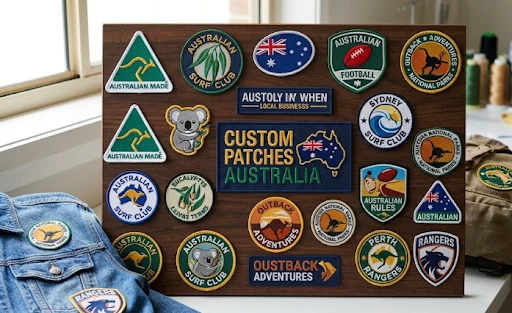
Choosing between the many types of custom patches Australia suppliers offer can feel overwhelming when you are new to branded merchandise or club regalia. Every material behaves differently, holds up to different conditions, and suits different budgets.
Whether you are outfitting a sporting club, branding workwear, or creating collector pieces for an event, understanding custom patch materials before you order will save you money and disappointment further down the track.
At Custom Patches Australia, we manufacture every patch style in house, which means we can walk you through the practical differences between materials rather than simply upselling the most expensive option.
This guide breaks down the major patch styles Australia that customers order most often, explaining where each one performs best and giving you a straightforward way to decide which patch suits your project.
Embroidered Patches: The Classic Choice
Embroidered patches remain the most requested option among the types of custom patches Australia organisations order, and for good reason. Thread is stitched directly onto a backing fabric, usually twill, to create a textured, three-dimensional finish that reads as premium and durable.
Sporting clubs, schools, defence groups, and emergency services across the country favour embroidered patches because they withstand years of washing, sun exposure, and general wear without fading or cracking.
The trade-off with embroidered patches is fine detail. Thread cannot replicate small text or intricate gradients the way printed materials can, so designs with a lot of fine linework are usually simplified into bold shapes and clean lettering. If your logo has fewer than six colours and reasonably thick lines, embroidery will almost always give you the best-looking, longest-lasting result.
Coverage also matters here. Full embroidered coverage, sometimes called 100 per cent embroidery, hides the backing fabric completely for a fully stitched look. Partial embroidery leaves some twill visible, which can lower cost but also changes the finished appearance considerably, so it pays to ask your supplier which coverage level your quote includes.
Woven Patches: Detail Without the Weight
Woven patches are created on specialised looms rather than stitched with a needle, which allows for much finer detail, smaller text, and thin lines that embroidery cannot achieve. This makes woven patches one of the more versatile custom patch materials for logos with intricate typography, gradients, or photographic-style artwork.
Woven patches sit flatter against fabric than embroidered patches, which some customers prefer for a more subtle, modern look on caps, jackets, and uniforms. They are also generally lighter, which matters for garments where excess weight or bulk is undesirable, such as fitted caps or technical outdoor clothing.
Where woven patches fall short is texture. If you want that raised, tactile stitched feel that signals a traditional patch, a woven one will feel comparatively flat. Many of our Australian clients choose woven patches for corporate uniforms and detailed brand marks, while reserving embroidery for club crests and heritage-style badges.
PVC Patches: Built for the Outdoors
PVC, or polyvinyl chloride, patches are moulded from soft rubber-like material rather than stitched or woven. They are naturally waterproof and resistant to mud, salt water, and UV exposure, which makes them a favourite among the types of custom patches Australia outdoor, marine, and adventure brands choose for gear that faces harsh conditions.
Because PVC is moulded rather than sewn, designers can achieve raised 3D effects, bright colour blocking, and even glow-in-the-dark or reflective finishes that are impossible with thread-based materials. PVC patches also do not fray at the edges, so they hold their shape indefinitely even on patches with intricate cut lines.
The main consideration with PVC is flexibility. These patches are stiffer than fabric-based options, so they are better suited to bags, jackets, and gear rather than curved or tightly fitted garments. They are also usually attached with hook-and-loop backing rather than sewn directly on, which is worth factoring in if you want a permanent attachment.
Leather Patches: Premium and Understated
Leather patches, whether genuine or vegan leather, bring a premium, earthy aesthetic that suits hats, denim, bags, and rustic branding. Designs are typically laser engraved or debossed into the surface rather than printed, giving a subtle, tone-on-tone finish that ages attractively over time.
This material has become increasingly popular with Australian hospitality brands, artisan producers, and outdoor apparel labels looking for a patch that feels tactile and high-end rather than sporty. Leather patches pair particularly well with custom caps for brands wanting a cohesive, premium headwear range.
Leather is not ideal for multicolour branding since the contrast typically comes from engraving depth rather than ink or thread colour. If your logo relies on bright, distinct colours, leather will not showcase it the way embroidery or PVC will.
Chenille Patches: Bold Varsity Style
Chenille patches use a thick, fuzzy yarn that creates the raised, textured look associated with varsity jackets, letterman gear, and retro sporting badges. This material produces some of the boldest, most eye-catching types of custom patches Australia schools, sporting clubs, and streetwear brands order for statement pieces.
The tactile, oversized letter style that chenille is known for makes it a poor choice for small or detailed designs but an excellent one for large lettering, numbers, and simple mascot artwork. Chenille patches are usually sewn on rather than ironed, given their thickness, so factor sewing time into your production and delivery expectations.
Printed and Sublimated Patches: Full Colour Photography
Printed and dye sublimated patches allow for unlimited colours, gradients, and photographic detail on a fabric backing, which none of the stitched or moulded materials above can match. This makes them the right choice for designs with complex artwork, sponsor logos, or full-colour photography that would lose all nuance in thread.
Sublimation dyes the design directly into the fibre of the fabric, so the finish is smooth to the touch rather than raised, and the colours will not crack or peel with washing. Printed patches are considerably more budget-friendly for large, complex, full-colour designs than the equivalent would be in embroidery, since colour count does not affect production cost the way it does with thread.
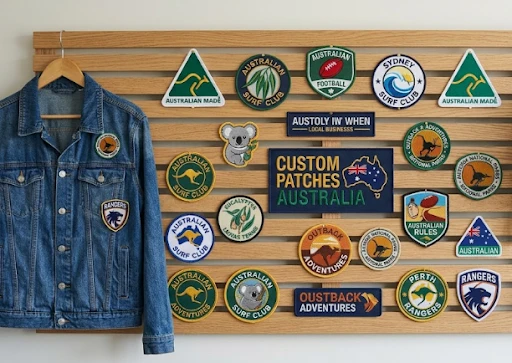
Patch Styles Australia Businesses Choose for Attachment
Material is only one half of the decision. The second is how the patch attaches to a garment, and this is where customers’ requests tend to fall into four main categories:
Iron-on patches use a heat-activated adhesive backing that bonds when pressed with a household iron or heat press. These suit lightweight applications, promotional giveaways, and situations where the customer will apply the patch themselves at home.
Sew-on patches are the most secure and durable attachment method, recommended for uniforms, workwear, and anything that will be washed repeatedly or subjected to physical activity. There is no adhesive to weaken over time, only stitching with a needle around the patch border.
Velcro or hook and loop patches allow patches to be removed and swapped, which is popular with tactical gear, defence and emergency services uniforms, and modular apparel where rank, name, or team badges change regularly. The hook and loop are sewn onto the patch and the surface each, providing the flexibility.
Adhesive-backed patches use a peel-and-stick sticker backing suited to short-term use on hats, bags, or promotional material where permanence is not required.
Considering a mixed order across several attachment types for one event or uniform rollout? Speak with our production team about combining styles in a single bulk order without paying multiple setup fees.
How to Choose the Right Patch Material
Selecting from the many types of custom patches Australia suppliers manufacture comes down to four practical questions.
First, consider the environment the patch will face. Outdoor, marine, or high-abrasion use points towards PVC patches, while everyday apparel suits embroidered, woven, or printed options comfortably.
Second, look at your design complexity. Simple logos and text with fewer than six colours work beautifully in embroidery. Detailed, multicolour, or photographic designs need woven, printed, or sublimated finishes to render accurately.
Third, factor in the garment itself. Fitted caps and technical fabrics often suit flatter printed or woven patches, while jackets, bags, and heavier fabrics can carry the weight and texture of embroidery, chenille, or PVC comfortably.
Finally, weigh up your budget against order volume. Printed and sublimated patches typically offer the lowest cost per unit for large, complex, full-colour orders, while embroidery remains highly cost-effective for simpler designs at almost any volume.
Additionally, using the right border type helps make the patch appear more pleasant and adds durability. Merrowed borders bring a classic raised edge that prevents fraying. A hot/laser-cut border gets you any shape you want with precision. The satin stitch introduces a flat and seamless border to custom patches.
Why Order Your Custom Patches From an Australian Manufacturer
Ordering through an Australian-focused supplier means faster turnaround for local delivery, sizing and terminology that match Australian conventions, and support during business hours in your own time zone. Some overseas-focused patch sites service the Australian market as an afterthought, with generic content and limited guidance on shipping timelines to Australian addresses.
At Custom Patches Australia, every one of the types of custom patches Australia customers request, from embroidered club crests to PVC adventure badges, is produced with local delivery timeframes and Australian compliance requirements in mind. Additionally, transparent pricing helps avoid hidden charges.
Frequently Asked Questions
What is the most durable type of custom patch?
Embroidered and PVC patches are generally considered the most durable types of custom patches Australia that customers can order. Embroidered patches use tightly stitched thread that resists fraying, fading, and repeated washing for years, making them a long-standing favourite for uniforms and club regalia. PVC patches are moulded rather than stitched, so they are naturally waterproof and highly resistant to cracking, UV damage, and rough handling outdoors. Woven and printed patches are durable, but embroidery and PVC surpass them in toughness against abrasion, saltwater, and washing, making them ideal for workwear, sporting clubs, and outdoor gear.
Which custom patch material is cheapest for bulk orders?
Printed and dye sublimated patches are usually the cheapest custom patch materials for large bulk orders, particularly when a design includes several colours or fine detail. This is because printing costs stay relatively flat regardless of colour count, while embroidery costs rise with thread colour changes and stitch density. For simple one or two-colour logos, however, embroidery can be just as cost-effective per unit at scale, since setup costs are spread across a larger order. The cheapest option ultimately depends on design complexity as much as quantity, so it is worth requesting quotes across two or three materials before finalising a bulk order.
Can I mix patch styles Australia-wide within one order?
Yes, most Australian patch manufacturers, including our own production line, can produce mixed material orders within a single project. It is common for organisations to order embroidered patches for formal uniforms alongside PVC or Velcro-backed patches for tactical or outdoor gear within the same rollout. Combining styles in one order can also reduce overall setup costs compared with placing separate orders with different suppliers. When requesting a quote for a mixed order, provide artwork and intended use for each patch type so your supplier can recommend the most suitable material and attachment method for every application.
How long does custom patch production take in Australia?
Production timelines vary by material and order size, but most Australian patch makers require between seven and ten business days from artwork approval to completed production for standard embroidered or woven patches. PVC and chenille patches can take slightly longer due to mould creation or specialised sewing requirements. Printed and sublimated patches are often faster to produce since they skip physical stitching or moulding stages entirely. Rush production is available with many suppliers for an additional fee, so if you are working to a tight event or uniform rollout deadline, confirm expedited options and shipping timeframes before placing your order.
Get Your Custom Patch Quote Today
This blog covered the major types of custom patches Australia that businesses and clubs rely on. The next step is turning your design into a finished product. Our team at Custom Patches Australia can recommend the right custom patch materials for your budget, garment, and intended use, then walk you through the process before any production begins.
Contact us for a free quote today and see your design brought to life in the material that suits it best. Looking for samples before you commit to a bulk order? Get a free digital mock-up from our expert team, and they will show you exactly how your design will look in your chosen material.